 Xiantao Zhikang Protective Products Co., Ltd.
The core characteristics of the practicality of protective clothing
News
299
I. Ultimate Protection: Core Capability of Multi-Level Risk Isolation
The core value of protective clothing lies in constructing a safety barrier between the human body and hazardous environments. Its protective performance achieves comprehensive coverage by accurately matching different types of hazards. According to the national standard Selection, Use and Maintenance of Chemical Protective Clothing (AQ/T 6107—2008), protection levels are classified into three core types based on risk severity:
- Gas-tight protective clothing can resist highly toxic gaseous chemicals and high-vapor-pressure mists, adopting a full-body sealed design with an independent air supply system. It is suitable for operating scenarios involving highly toxic substances with LD₅₀ ≤ 5mg/kg.
- Liquid-tight protective clothing blocks splashes of high-concentration highly toxic liquids and non-pressurized chemical mists through impermeable fabrics, available in one-piece and partial protection styles.
- Dust-tight protective clothing specializes in blocking chemical dust and mineral fibers, providing respiratory safety guarantees for industries such as foundry and mining.
For special hazard scenarios, specialized protective clothing demonstrates precise protection characteristics:
- Flame-retardant clothing uses a composite fabric of aramid 1414 and flame-retardant viscose, which can withstand 800℃ flame combustion for 10 seconds and quickly form a carbonized layer, meeting the protection requirements for open flames and flashover risks specified in GB8965.1.
- Arc-flash protective clothing resists thermal damage caused by instantaneous energy release from high-voltage electric arcs through flame-retardant cotton blended with silver-plated carbon fiber yarn.
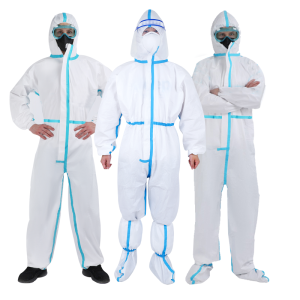
- Biological protective clothing adopts an SMS non-woven fabric + microporous membrane structure, achieving 99% filtration efficiency for 0.1-micron aerosol particles and building a solid virus barrier for medical staff.
II. Material Technology: The Art of Balancing Safety and Practicality
The performance ceiling of protective clothing is determined by fabric technology. Modern protective materials have achieved a triangular balance of “protectiveness, comfort, and durability.” In the field of chemical protection, butyl rubber coatings combined with impermeable membranes are widely used, which can resist 96% concentrated sulfuric acid without penetration for 30 minutes. Meanwhile, through breathable structure design, they meet the moisture permeability and air permeability requirements specified in AQ/T 6107—2008, avoiding stuffiness and discomfort during long-term wear. The general technical specification (GB 20097-202X) further clarifies material safety indicators: formaldehyde content and pH value must comply with textile safety standards, and harmful substances such as azo dyes are prohibited to ensure no skin irritation risks upon contact.
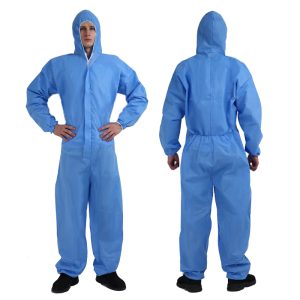
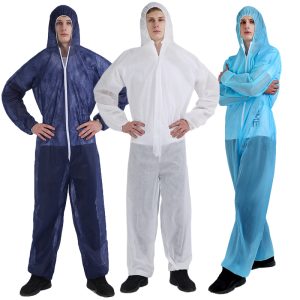
In terms of mechanical properties, protective clothing fabrics must pass tear resistance and puncture resistance tests. Seams adopt special sewing processes or thermal bonding technology to prevent protective failure due to tensile forces during movement. For reusable scenarios, materials need to have anti-aging properties to reduce the risk of performance degradation during long-term use; disposable protective clothing optimizes lightweight design while meeting protection requirements, balancing usability and environmental friendliness.
III. Structural Design: Practical Optimization for Scene Adaptation
The structural design of protective clothing revolves around the dual goals of “safety adaptability” and “operational flexibility,” achieving the unity of protective functions and user experience. Ergonomic design is a core consideration. According to the practical performance test requirements in Appendix A of GB 20097-202X, the clothing must ensure joint mobility. Cuffs and trouser cuffs adopt adjustable tightening designs to prevent the infiltration of harmful substances without affecting operational accuracy—examples include the two-piece structure of welding clothing with leg protection accessories and the segmented fabric design of molten metal splash protective clothing, both reflecting scenario-specific optimization thinking.
Size standardization is the fundamental guarantee of structural design. Integrating the size system of GB/T 13640-2008, protective clothing is accurately classified into specifications based on human body control dimensions. Loose-style products balance protective coverage and operational comfort through reasonable garment length and chest circumference design. In special scenarios, protective clothing forms a systematic protection with supporting equipment:
- Equipotential clothing for electrical operations includes a complete set of components (jacket, trousers, gloves, shoes, and socks), forming a uniform equipotential shielding layer through conductive materials.
- High-temperature operation protective clothing cooperates with head and foot protection equipment to resist multiple thermal hazards such as contact heat, convective heat, and radiant heat.
IV. Scene Adaptation: Full-Field Coverage from Industry to People’s Livelihood
The characteristics of protective clothing are fully reflected through scenario-based segmentation, forming a complete product system covering industrial production, emergency rescue, and medical health. In the petrochemical industry, water- and oil-resistant protective clothing undergoes special surface treatment to achieve a balance between oil-water barrier and breathability, available in lightweight summer styles and warm winter styles. In the electronic manufacturing field, anti-static protective clothing is woven with conductive fibers to effectively dissipate human static electricity, preventing explosion risks caused by static sparks, and its conductive performance must be regularly tested to ensure compliance.
In emergency rescue scenarios, protective clothing demonstrates multi-functional integration characteristics:
- Firefighting thermal insulation clothing is designed in accordance with GB38453 to resist contact heat and radiant heat from high-temperature objects.
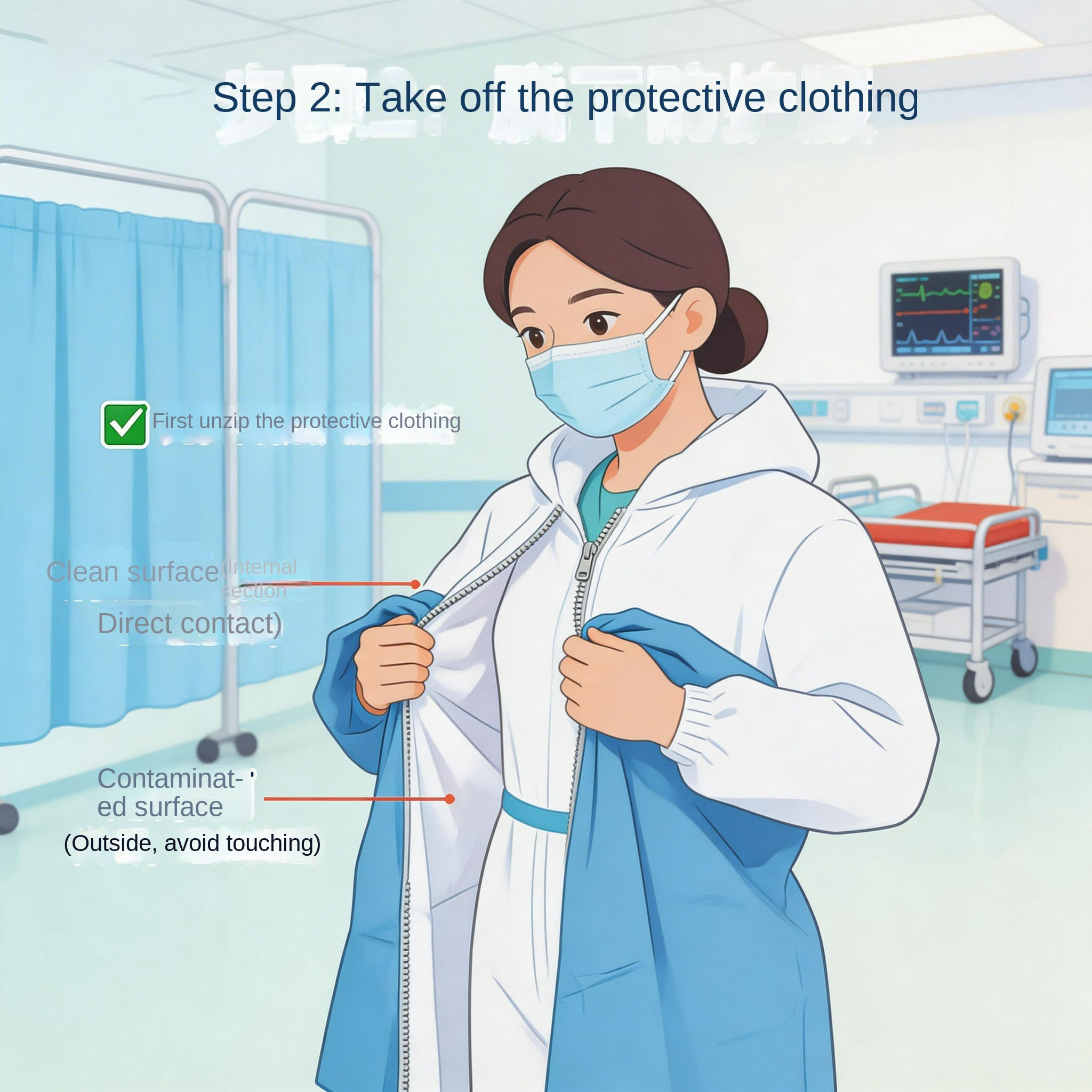
- During chemical leakage disposal, gas-tight protective clothing cooperates with MSDS (Material Safety Data Sheet) risk assessment to achieve broad-spectrum protection against unknown toxic substances. In the daily protection field, disposable medical protective clothing is simplified into a lightweight structure, improving donning and doffing efficiency while ensuring biological protection to meet large-scale epidemic prevention needs.
V. Normative Guarantee: Full-Lifecycle Safety Management
The use effect of protective clothing is inseparable from standardized management, requiring strict processes from selection to scrapping. During the selection stage, the protection level must be determined based on risk assessment results, combined with labor intensity and exposure time—for high-intensity operations, styles with better breathability should be prioritized to avoid operational errors caused by excessive physical exertion. During use, regular inspections of fabric aging and damage are required. Limited-use chemical protective clothing must be evaluated for reusability in accordance with standards, and those used in highly toxic environments should be directly scrapped.
Storage and maintenance also affect protective performance. According to GB 20097-202X, protective clothing should be stored in a dry and well-ventilated environment, avoiding direct sunlight and contact with chemical substances to prevent material aging and degradation. Label management specifications require each piece of protective clothing to be marked with protection type, applicable scenarios, size specifications, and service life, ensuring users can quickly identify adaptability and avoid misuse risks from the source.