 Xiantao Zhikang Protective Products Co., Ltd.
Preparation before wearing the 1.
Assess the environment

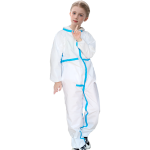
Confirm the pollution level of the operation area and select protective clothing with corresponding protection level (such as medical disposable protective clothing, chemical protective clothing, etc.).

Personal preparation

Wear well-fitting underwear to avoid too tight clothing affecting movement; trim nails, remove sharp objects such as jewelry and watches to prevent scratching protective clothing.

Clean your hands and wear powder-free inspection gloves (if multiple layers of gloves are required, wear one layer first).

Check protective clothing

Check the integrity and validity of the packaging, and confirm that the protective clothing is free of damage, cracking and contamination.

Choose the right size and make sure you move freely.

Prepare other protective equipment

Prepare masks (e. g. N95/KN95), goggles/face screens, shoe covers, headgear, etc. as required and check their effectiveness.

2. Wearing Sequence and Key Points
Follow the wearing sequence (take medical protective clothing as an example):
Hand hygiene → wearing a medical protective mask (air tightness check) → wearing a disposable hat → wearing protective clothing → wearing goggles/face screen → wearing gloves (wrapping protective clothing cuffs) → wearing shoe covers

Key Details

Wear protective clothing: after unzipping, wear the lower limb first, then the upper limb. After wearing the hat, close the zipper. The sealing tape (if any) should be pressed tightly.

Tightness inspection:

Make sure that the protective clothing cuffs are completely wrapped around the outer layer of the inner gloves; the pant legs cover the shoe covers or boots.

Check whether the protective clothing is too tight or loose to avoid tearing or rubbing.

Two-person collaboration: In high-risk areas, it is recommended that two people check each other's wear integrity.

3. tripping process (high risk link!)
Principle

It is assumed that the outer surface of the protective clothing is contaminated, and when removing it, absolutely avoid contact with the inner clean surface.

Move gently and slowly to prevent dust or liquid splashing.

Hand disinfection is required after each step.

Sequence (in the designated detachment area, according to the specification process):
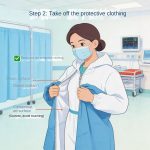
Hand disinfection → removing shoe cover → hand disinfection → removing rubber strip/zipper of protective clothing → removing protective clothing (rolling from inside to outside) → hand disinfection → removing goggles/face screen → hand disinfection → removing hat → hand disinfection → removing mask → hand disinfection

Precautions

When taking off the protective clothing, touch the cleaning surface with both hands from the inside and roll it down slowly (to avoid shaking), with the contaminated surface always facing outward.

Discard to the designated medical waste container, and reuse of disposable protective clothing is strictly prohibited.

Immediately after removal, clean the whole body (bath is preferred).

4. General Considerations
Time control

The continuous operation time after wearing should not be too long to avoid heat stroke or operation error caused by sultry and dehydration.

Prohibited Actions

Do not adjust clothing, rub your eyes, or touch personal items (such as mobile phones) during wearing.

It is strictly forbidden to eat, drink and go to the toilet in the polluted area.

Emergency Treatment of Damage

If the protective clothing is accidentally damaged, evacuate the contaminated area immediately and replace it after removing it according to the procedure.

Training and Exercises

Untrained personnel are not allowed to operate, need to form muscle memory through repeated practice.

Extra tips 5. different scenarios
Medical epidemic prevention: follow the "hospital isolation technical specifications" and other standards, pay attention to the close of masks and protective clothing.

Chemical protection: select the material corresponding to the resistance of chemical substances, and thoroughly decontaminate after removal.

Biological laboratory: may be equipped with positive pressure protective clothing, and strictly follow the air tightness inspection process.

Summary points
The core of the safe use of protective clothing is: pre-inspection, orderly wear, slow removal, pollution isolation. Neglect of any step may negate the protective effect, so it is important to maintain a high degree of concentration. It is recommended to consolidate the practice in conjunction with live drills and video tutorials.
Copyright: China Xiantao Zhikang Protective Products Co., Ltd.



您好!请登录